What Is a Sauna Hat - and Where Did It Come From?
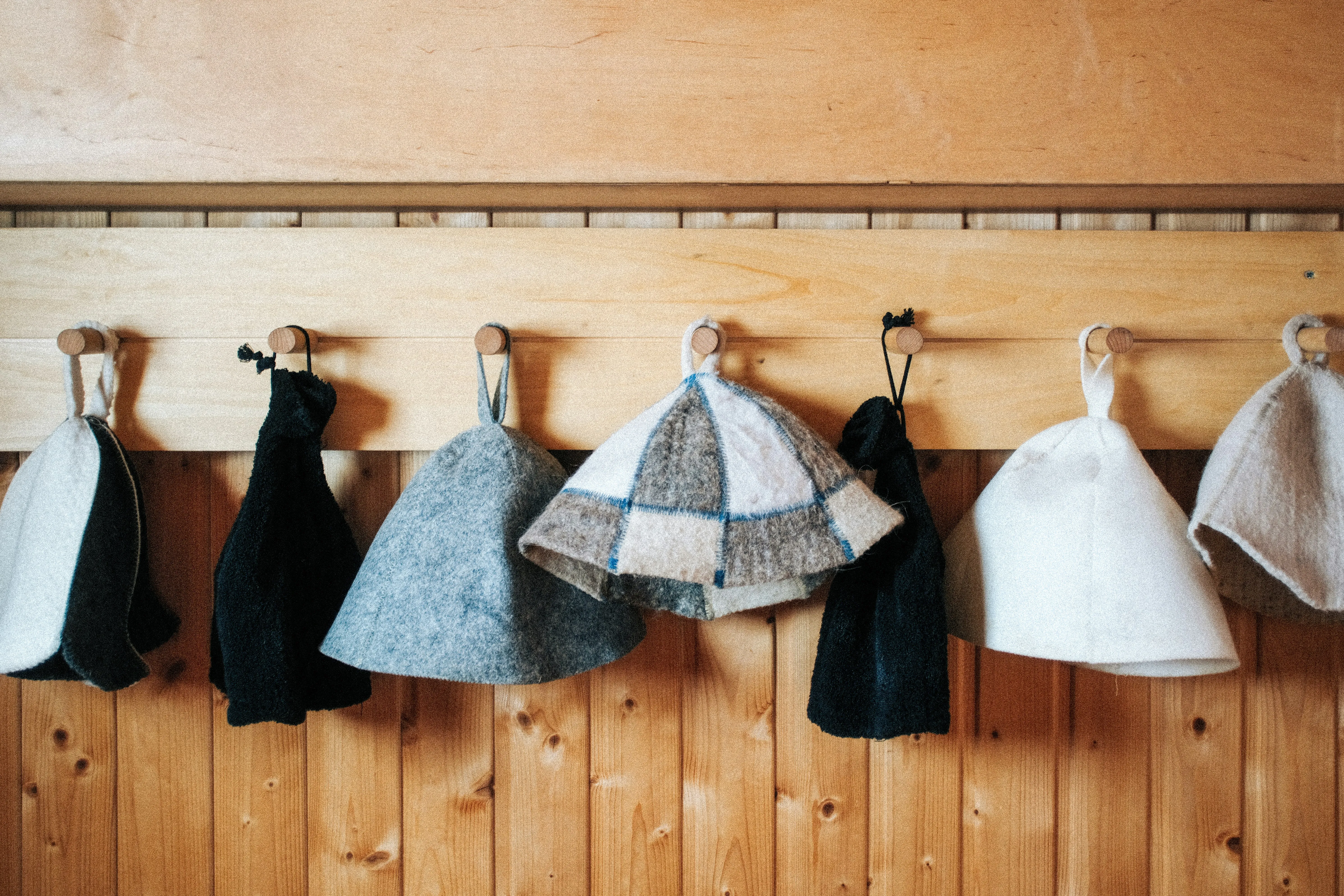
A sauna hat is a thick cap - usually made from wool felt - designed to insulate your head from the intense heat at the top of a sauna cabin. The sauna hat benefits are straightforward: slower head heating, less dizziness, and longer sessions before discomfort sets in.
The tradition is rooted in Russian banya culture, where felt hats have been standard gear since at least the 10th century. Banya sessions often exceed 93°C (199°F), and the hat is as essential as the venik (birch branch bundle). You will find them sold in sets alongside felt mitts and aromatic extracts in any Russian bathhouse.
Worth noting honestly: Finnish sauna culture - the other major tradition - does not traditionally use hats. Finns manage heat through löyly (the steam created by pouring water over hot stones), bench positioning, and shorter rounds. For a deeper look at how these two traditions differ, see our Finnish sauna vs Russian banya comparison. Neither approach is wrong. The question is whether a hat adds value for your practice, in your sauna.
The Sauna Hat Benefits: What the Evidence Supports
Slower Head Overheating
Your head houses a dense network of blood vessels close to the skin surface and contains the brain’s thermoregulatory center. Heat rises, so your head sits in the hottest air in the room. Research into thermal balance has shown that protecting the head and neck region is one of the most effective ways to manage early-stage heat stress - and the dizziness that cuts many sessions short often starts at the scalp, not the core.
Wool fibers trap tiny air pockets that act as a thermal buffer, slowing the rate at which your head absorbs convective heat. This is the same principle that makes wool effective in cold weather - it insulates in both directions.
Longer, More Effective Sessions
Evidence suggests that sauna sessions of 15-20 minutes at appropriate temperatures produce the best outcomes for circulation, cardiovascular health, and stress reduction. But many people bail at the 8-10 minute mark because their head feels uncomfortably hot while their body is still fine. A sauna hat removes this limiting factor, helping you reach the session lengths where the therapeutic dose actually accumulates.
Hair and Scalp Protection
A 2011 study in the Annals of Dermatology confirmed that prolonged heat exposure can cause structural damage to the hair shaft. Typical sauna temperatures of 70-100°C exceed the approximately 60°C threshold where hair damage begins. This is especially relevant if your hair is color-treated, chemically processed, or naturally dry - these hair types are already more porous and structurally weakened.
Wool’s natural lanolin content adds a moisture-retaining layer, and the insulation keeps direct heat off your scalp. If you sauna frequently and care about your hair condition, this is probably the most concrete, least-debatable benefit.
Ear and Forehead Comfort
Your ears are thin, highly vascularized, and notoriously sensitive to heat. In saunas running above 82°C (180°F), the stinging sensation on your ear tips is often the first discomfort you notice. A hat that covers the tops of your ears provides immediate relief. The secondary benefit - absorbing sweat from your forehead so it doesn’t run into your eyes - sounds minor but makes a real difference during intense sessions.
Hygiene
Wool is naturally antibacterial and odor-resistant. A wool sauna hat retains its insulating properties even when damp - something a cotton towel cannot claim. Between sessions, it dries quickly and resists the kind of microbial buildup that makes damp towels smell after one use.
The Case Against: When Sauna Hats Are Unnecessary
Not Every Sauna Demands One
If you use an infrared sauna at 46-60°C (115-140°F), your head is not the limiting factor. Infrared heat works through radiation - it warms your body directly rather than superheating the air above you. The convective heat problem that sauna hats solve largely does not apply. (If you are shopping for an infrared sauna, the more relevant safety question is EMF exposure - not head protection.)
Similarly, in a steam room at 40-50°C (104-122°F), humidity is the dominant stressor, not air temperature at head height. And wool loses its insulating effectiveness when fully saturated with moisture, making it a poor choice in high-humidity environments.
The “You’re Doing It Wrong” Argument
Some experienced sauna practitioners - particularly those in Finnish tradition - argue that if your head is overheating, the real solution is to adjust your approach: lower the temperature, sit on a lower bench, or manage löyly more carefully. This is a valid point. A sauna hat should never be a substitute for dangerously high temperatures or reckless session lengths.
The Towel Alternative
A damp towel wrapped around your head provides similar insulation, better coverage (including hair and neck), and actively cools through evaporation. It costs nothing and is available everywhere. For occasional sauna users, a towel gets the job done.
Marketing Hype
Most pro-hat content online is produced by hat retailers - a conflict of interest worth acknowledging. Some claims circulating in marketing materials (detox acceleration, immune boosting) have no supporting evidence. And no direct clinical trials on sauna hats specifically have been published. The supporting evidence is real but indirect, drawn from thermoregulation research and hair damage studies.
Do You Need One? Sauna Hat Benefits by Sauna Type
| Sauna Type | Temp Range | Hat Usefulness | Why |
|---|---|---|---|
| Russian banya | 70-100°C (158-212°F) | High | Cultural norm. High convective heat makes head protection genuinely valuable. |
| Finnish dry sauna | 70-100°C (158-212°F) | Moderate | Not traditional, but useful for sessions above 15 minutes at higher temperatures. |
| Smoke sauna (savusauna) | 70-85°C (158-185°F) | Moderate | Similar to Finnish dry sauna. |
| Steam room | 40-50°C (104-122°F) | Low | Wool loses insulating properties when saturated. Humidity, not air temp, is the stressor. |
| Infrared sauna | 46-60°C (115-140°F) | Low to none | Heat is radiant, not convective. Head overheating is rarely the issue. |
The strongest case for a sauna hat is in high-temperature traditional saunas and Russian banya. The weakest case is in infrared saunas and steam rooms. For a deeper look at the differences between these two sauna types - including when to use each and how to combine them - see our traditional vs infrared sauna comparison. If you fall somewhere in between, it comes down to personal comfort and session length.
Is It a Man-or-Woman Thing?
No. The physics of thermoregulation does not discriminate by gender. Your head heats up the same way whether you are male or female.
In Russian banya culture, both men and women wear hats - it is standard practice for everyone. The sauna benefits for men and sauna timing considerations for women are well documented, and a sauna hat supports both equally. Anyone with long, color-treated, or chemically processed hair benefits from the hair protection regardless of gender.
Design differences between “men’s” and “women’s” sauna hats are purely aesthetic - embroidery, colors, patterns. Functionally, every sauna hat does the same job. Marketing that targets one gender is a branding choice, not a reflection of who actually needs one.
What to Look For in a Sauna Hat
If you have decided a hat makes sense for your practice, the key factors are material, thickness, and fit. In short: look for 100% wool felt (never synthetic “felt,” which is polyester and can off-gas at high temperatures), a thickness of 2-3mm depending on your sauna’s intensity, and enough coverage to protect your ears.
We are preparing a detailed guide on sauna hat types and how to choose the right one for your preferred sauna style - along with a companion guide on caring for your hat so it lasts for years. Both are coming soon.
The Bottom Line
A sauna hat is a useful tool for specific contexts, not a universal requirement. If you regularly sit in a traditional sauna or banya above 70°C for 15 minutes or more, a wool felt hat will likely improve your comfort, extend your sessions, and protect your hair. If you use an infrared sauna or steam room, you can skip it.
As with everything in thermal exposure, the goal is to match your gear to your actual practice - not to collect accessories because the internet said you need them.
Standard safety reminder: Stay hydrated during all sauna sessions, respect your body’s signals, and consult a physician before starting thermal exposure if you have cardiovascular conditions, are pregnant, or take medications that affect thermoregulation. For a complete beginner’s framework, see our Beginner’s Thermal Exposure Protocol.